The Science of Third Places (and Why You Need One)
Your home is your first place. Work is your second. Research says you need a third, an informal spot where you show up regularly and let connection happen on its own.
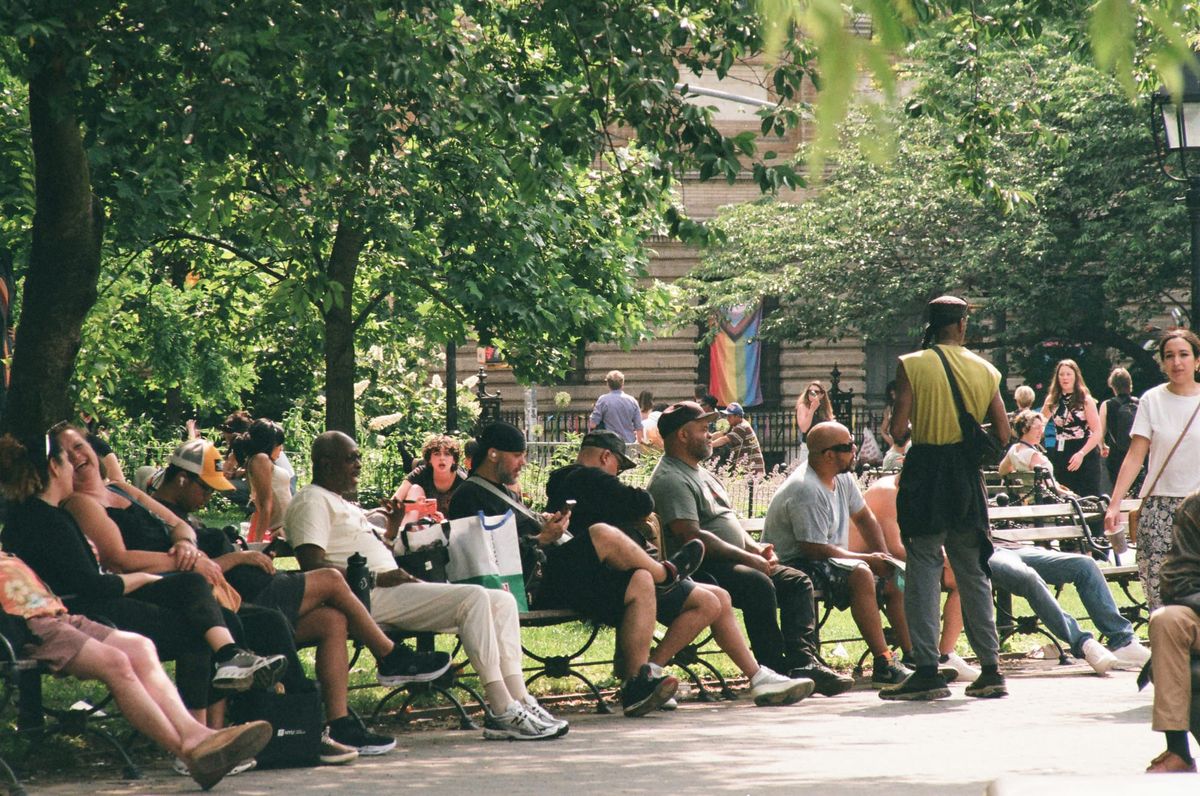
In 1989, a sociologist named Ray Oldenburg published a book that gave a name to something most of us have felt but could not quite describe.
He called it the "third place."
Your home is your first place. Your workplace is your second. A third place is somewhere else entirely. It is the coffee shop where the barista knows your name. The gym where you always see the same faces. The dog park where conversations start without anyone planning them. The library, the barbershop, the community garden, the farmers market.
Oldenburg argued that these informal gathering spots are the social backbone of communities. They are where friendships form without effort, where you become a regular, where you start to belong somewhere simply by showing up.
And they are quietly disappearing from American life.
What we are losing
The numbers paint a clear picture.
In 2024, 17% of Americans said they have zero close friends. In 1990, that number was 2.5%.
Religious service attendance, one of the most reliable third place experiences in American life, dropped from 44% to 36% between 2010 and 2025 according to AARP's research.
Americans are spending less time with friends than they did 20 years ago, and the pandemic made it worse. That decline has not recovered.
The physical spaces still exist. There are more coffee shops in America than ever before. But something has changed about how we use them. People sit alone with headphones in, staring at laptops. The space looks like a third place. But the behavior that makes it one, the lingering, the chatting with a stranger, the sense of being a familiar face, has faded.
Why third places work so well
The magic of a third place is that it removes the hardest part of socializing: the planning.
Think about what it takes to see a friend. You have to reach out, propose a time, negotiate schedules, choose a location, and commit. For someone who is already feeling disconnected, that activation energy can feel enormous. And if the interaction does not go well, it can confirm the belief that connection is not worth the effort.
Third places bypass all of that. You do not plan to talk to someone at the gym. You do not schedule a conversation at the dog park. You just show up. And when you show up regularly, familiarity does the work for you.
Psychologists have a name for this. It is called the "mere exposure effect." The more often you see someone, the more positively you tend to feel about them, even if your interactions are brief. Third places create exactly the right conditions for this to happen naturally.
Oldenburg said a good third place has a few key qualities. It should be on neutral ground, so nobody owns it. It should feel like a leveler, where job titles and income do not matter. Conversation should be the main draw. And it should have regulars, people who come back again and again.
You do not need a place that checks every box. You just need somewhere that feels welcoming enough to come back to.
How to find yours
This is simpler than it sounds. But it requires one thing above all else: consistency.
Pick one place you can go at least twice a week, at roughly the same time. It does not need to be fancy. A morning coffee run. An evening gym session. A Saturday farmers market. A weeknight yoga class.
Show up without headphones. Let yourself be available. You do not have to start conversations. Just be present, make eye contact, say hello.
Within two or three weeks of regular visits, something starts to shift. The staff recognize you. The person who is always there at the same time gives you a nod. Someone makes a comment about the weather or the new menu item or the crowded parking lot. These are tiny moments. They feel insignificant on their own. But they are the foundation of social connection, the low stakes, low pressure interactions that gradually build into something real.
If there is no natural third place in your area, consider creating one. Host a standing weekly coffee at your kitchen table for a few neighbors. Start a Saturday morning walking group at a local park. Join a community board or volunteer shift with a regular schedule. The structure does not need to be complicated. It needs to be consistent and open to whoever shows up.
For men especially
A 2025 study published in Health Promotion International examined a men's walking group in regional Australia and found that it functioned beautifully as a third place. Participants reported improvements in mood and wellbeing that came from the combination of physical activity, social interaction, and a genuine sense of belonging.
What made it work was the structure. It was welcoming, low pressure, and consistent. Show up at this time. Walk. Talk if you want to, or just walk. That simplicity removed every barrier to participation.
Men who have lost their social infrastructure through career changes, relocation, or life transitions often find that activity based third places (walking groups, gyms, pickup sports, workshops) are the most natural fit. The activity gives you a reason to be there. The friendship forms inside that reason.
The bottom line
You do not need to overhaul your social life. You do not need to sign up for ten new activities. You need one place where you show up regularly and let connection develop at whatever pace feels right.
The hardest part is the first visit. After that, consistency does the heavy lifting.
Sources
Oldenburg, R. The Great Good Place: Cafes, Coffee Shops, Community Centers, Beauty Parlors, General Stores, Bars, Hangouts, and How They Get You Through the Day. Paragon House, 1989.
Putnam, R. D. Bowling Alone: The Collapse and Revival of American Community. Simon and Schuster, 2000.
IE Insights. "From Third to Fourth Spaces: Immersion That Builds Belonging." November 2025.
Health Promotion International. "An Update of Third Place Theory." 2025.
AARP. "Disconnected: The Escalating Challenge of Loneliness Among Adults 45 Plus." AARP Research, December 2025.
This article is for educational purposes only. It is not therapy, counseling, or medical advice. If you are experiencing persistent feelings of isolation or depression, please consult a licensed mental health professional. If you are in crisis, contact the 988 Suicide and Crisis Lifeline by calling or texting 988.